
Negotiating a premium domain price successfully means anchoring your opening offer below the seller’s asking price while backing it with comparable sales data, appraisal benchmarks, and a clear statement of end-use intent. The strongest domain buyers separate emotional attachment from valuation logic, use structured counter-offers instead of single lowball bids, and close through escrow within an agreed timeline before momentum fades. Mastering how to negotiate domain price without losing the deal ultimately comes down to preparation, patience, and knowing exactly when to walk away.
Every year, thousands of founders and marketers fall in love with a domain name, only to lose it entirely because their opening message scared off the seller or their counter-offer never landed. A six-figure domain doesn’t sell like a used car; it sells like a piece of intellectual property with a story, a valuation history, and often, an owner who has fielded a dozen lowball offers before yours. If you’re serious about acquiring a domain that anchors your entire brand, you need more than enthusiasm. You need a repeatable negotiation framework, and that’s exactly what this guide breaks down, from the psychology of the first message to the mechanics of closing through premium domain names marketplaces without overpaying or scaring the seller into silence.


This article draws on real negotiation patterns observed across brokered domain sales, appraisal methodologies used by professional valuators, and the timing tactics that consistently move a “no” into a signed transfer agreement.
Why Domain Negotiation is Different From Any Other Deal
Domain names occupy a strange middle ground between real estate and digital collectibles. Unlike a house, there’s no physical inspection. Unlike a stock, there’s no centralized exchange with live pricing. Consequently, negotiating a domain price requires you to build your own comparables, since no single authoritative source publishes them.
Additionally, sellers range wildly in sophistication:
- Domain investors who buy and hold hundreds of names and understand market value precisely.
- Accidental owners who registered a domain years ago and have no idea what it’s worth.
- Brokers representing a client with a specific reserve price in mind.
- End users who bought the domain for a business that never launched.
Each seller type demands a different opening approach. Consequently, the first step in any domain negotiation is diagnosing who you’re actually negotiating with, not just what the domain is worth.
Step 1: Build Your Valuation Before You Say a Word
Before you send a single message, you need a defensible number in your head. Skipping this step is the single most common reason buyers overpay or get laughed out of a negotiation.
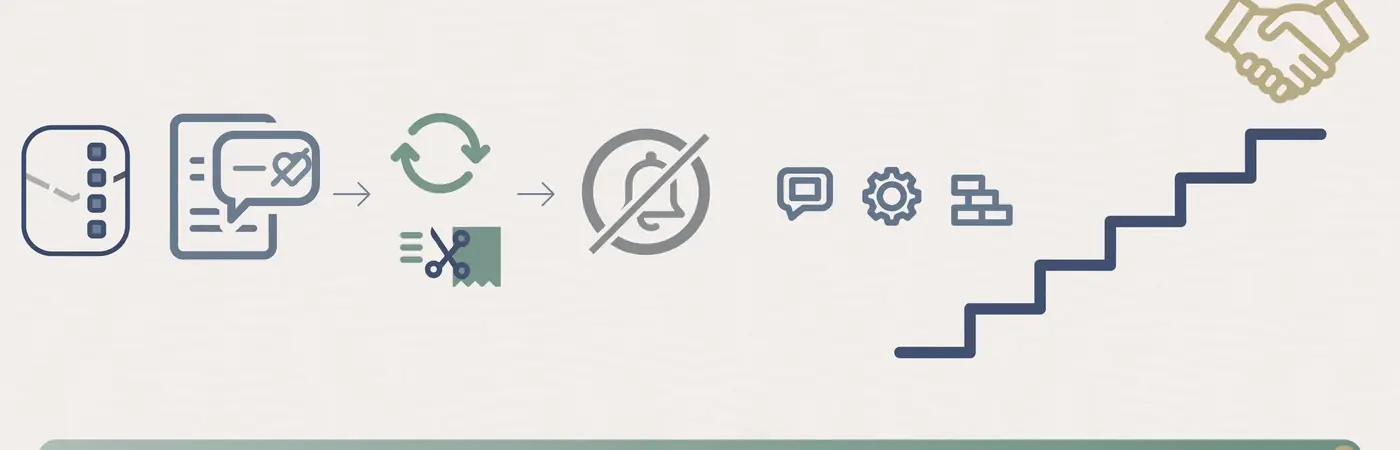
What Actually Drives Domain Value
- Length and memorability – shorter, pronounceable names command higher prices.
- Extension (TLD) – as explored in our piece on why .com still dominates domain psychology and buyer trust, the .com extension typically carries a 3-10x premium over alternative TLDs for identical strings.
- Exact-match commercial intent – domains matching high-volume, high-CPC keywords sell for more.
- Brandability – invented or coined names (think Aufic, Aolra, Iuxor-style constructions) often trade at a premium because they’re trademark-friendly and globally pronounceable.
- Sales history – a domain with a documented prior sale price anchors expectations for everyone involved.
If you want a repeatable process for pricing before you negotiate, our breakdown of the factors professional appraisers actually weigh is a useful companion to this guide.
Quick Reference: Domain Valuation Signals
| Signal | Why It Matters | Impact on Price |
|---|---|---|
| Word count (1-2 words) | Easier recall, stronger brand fit | High |
| .com extension | Default trust extension for most buyers | High |
| Existing traffic/backlinks | Adds SEO and referral value | Medium-High |
| Trademark conflicts | Can suppress value or create legal risk | Negative |
| Comparable recent sales | Anchors realistic price expectations | High |
| Age of domain | Older domains can carry authority signals | Medium |
Step 2: Understand the Seller’s Position Before You Message Them
Once you know what the domain is realistically worth, shift your attention to the seller’s likely motivations. A negotiation that ignores the other side’s incentives is really just a monologue.

Ask yourself:
- Is this domain actively listed, or did I find it through outbound research?
- Has the owner parked it with ads, suggesting passive monetization they’d be reluctant to give up cheaply?
- Is there a broker involved, meaning a commission is baked into any number they quote?
- How long has the domain sat unsold, if it’s listed publicly?
A domain that’s been listed for two years at an unrealistic price is a very different conversation than one you’re approaching cold. In the former case, the seller may be more flexible than their listed price suggests; in the latter, you may be the first serious offer they’ve ever received, which sometimes makes them cautious rather than eager.
Step 3: Craft an Opening Offer That Doesn’t Kill the Deal
This is where most buyers go wrong. They either lowball so aggressively that the seller disengages, or they anchor so high that they leave money on the table before negotiation even begins.

The Anchoring Principle
Behavioral economics research consistently shows that whoever states a number first sets the psychological reference point for the rest of the negotiation, a phenomenon widely known as anchoring bias. In domain negotiations, this means your opening number should be:
- Below your maximum acceptable price, leaving room to move up.
- Above an insultingly low figure that signals you haven’t done your research.
- Supported by a one-line rationale (comparable sales, appraisal tools, or budget constraints).
Sample Opening Message Structure
- Brief introduction – who you are and why you’re interested (without over-explaining your business plans).
- The offer – a specific number, not a vague range.
- The rationale – one sentence citing comparables or appraisal data.
- An open door – inviting a counter rather than presenting an ultimatum.
Example: “Hi, I’m interested in [domain]. Based on recent comparable sales in this category, I’d like to offer $X. Happy to discuss if you have a different number in mind.”
Step 4: Navigate the Counter-Offer Without Escalating Emotion
Once the seller counters, resist the urge to respond immediately with your maximum number. A well-run negotiation moves in increments, not leaps.

Common Counter-Offer Patterns
- Small counter – the seller trims a modest amount off their asking price, signaling mild flexibility.
- No movement – the seller repeats their original number, often meaning they believe it’s already fair or firm.
- Silence – frequently interpreted as rejection, but in brokered deals this can simply mean the offer is being reviewed internally.
If you’re negotiating through a marketplace or broker, understanding platform-specific norms matters too. Our comparison of how Afternic, Sedo, Dan, and Atom differ in negotiation workflows and commission structures can help you calibrate expectations depending on where the domain is listed.
A Practical Counter-Offer Framework
| Round | Your Move | Rationale |
|---|---|---|
| 1 | Initial offer (60-70% of your ceiling) | Anchor low, leave room |
| 2 | Increase by 10-15%, reference comparables again | Shows good faith without overcommitting |
| 3 | Near-final offer with a stated deadline | Creates urgency without pressure tactics |
| 4 | Final number, framed as your best and final | Signals seriousness and closes the loop |
Common Mistakes Buyers Make in Domain Negotiations
Even experienced buyers fall into predictable traps. Avoiding these mistakes alone can save you thousands of dollars and weeks of wasted back-and-forth.
- Revealing your business plans too early. Sellers who sense a large funding round or urgent brand launch behind the scenes often hold firmer on price.
- Negotiating publicly on forums or social media. This tips off other potential buyers and removes your leverage.
- Skipping the appraisal step entirely. Without a number to anchor against, you’re negotiating blind.
- Making an offer and disappearing. Sellers remember unresponsive buyers and deprioritize them in future rounds.
- Failing to set a walk-away price before negotiating. Emotional attachment to a specific string of letters routinely leads to overpaying.
Expert Tips for Closing Without Losing the Deal
- Use a neutral escrow service for any transaction above a few thousand dollars; this protects both parties and signals professionalism.
- Set a soft deadline on your own offer (“I’d like to finalize by [date]”) to create gentle urgency without appearing desperate.
- Bundle value where possible – offering to cover transfer fees or escrow costs can close a small price gap without touching the core number.
- Keep tone collaborative, not adversarial. Domain sellers, especially individual investors, are far more likely to work with buyers who treat the process as a partnership.
- Document everything in writing, including agreed price, payment method, and transfer timeline, to avoid disputes later.

If the domain is part of a larger brand or business acquisition rather than a standalone purchase, the negotiation dynamics shift considerably. Our guide to the enterprise domain acquisition process covers how legal, financial, and brand teams typically coordinate on larger deals.
Step-by-Step: A Complete Domain Negotiation Walkthrough
- Research the domain’s value using comparable sales and appraisal tools.
- Identify the seller type – investor, broker, or accidental owner.
- Draft a concise opening offer with a clear rationale.
- Send the offer through a reputable channel (marketplace messaging, verified broker, or direct outreach).
- Respond to counters incrementally, moving in measured steps rather than jumping to your ceiling.
- Set a soft deadline once you’re within a reasonable range of agreement.
- Finalize terms in writing, including price, payment method, and escrow provider.
- Complete the transfer through escrow, releasing funds only once ownership is confirmed.
- Verify the domain transfer in your registrar account before considering the deal closed.
Negotiation Tactics Compared: Aggressive vs. Collaborative Approaches
| Approach | Typical Outcome | Best Used When |
|---|---|---|
| Aggressive lowballing | High risk of seller disengagement | Domain has sat unlisted for years with no activity |
| Collaborative anchoring | Higher success rate, slower process | Seller is an active investor or broker |
| Silent walk-away | Can prompt seller to re-engage with a better offer | You’ve already made a fair offer and been ignored |
| Escalating urgency (deadline-based) | Speeds up decision-making | Seller has expressed general interest but stalled |
The Psychology Sellers Use, and How to Respond

Experienced domain sellers, particularly investors who’ve closed dozens of transactions, rely on a handful of predictable psychological tactics. Recognizing these patterns in real time keeps you from reacting emotionally and paying more than the domain is actually worth.
- The “multiple offers” claim. A seller may mention that another buyer is interested to create urgency. This can be genuine, but it’s also a common pressure tactic. Respond by calmly restating your offer and your timeline rather than immediately raising your number.
- The silent treatment. Some sellers deliberately delay responses to make buyers anxious and more likely to increase their offer unprompted. Patience here works in your favor; resist the urge to bid against yourself.
- The “sentimental value” framing. Sellers sometimes describe a personal attachment to the domain to justify a higher price. While this can be genuine, it’s worth remembering that sentimental value doesn’t translate into market value, and your offer should still be grounded in comparables.
- Round-number anchoring. A seller quoting a suspiciously round figure ($10,000, $25,000, $50,000) is often signaling a starting point rather than a firm valuation. Treat round numbers as more negotiable than precise, oddly specific figures.
Understanding these patterns doesn’t mean assuming bad faith from every seller. Most domain owners are simply protecting their own interests, exactly as you are. The goal is to negotiate from a position of calm confidence rather than reactive urgency.
Choosing the Right Communication Channel for Your Offer
How you deliver your offer can matter almost as much as the number itself. Different channels carry different expectations and response patterns.
| Channel | Pros | Cons | Best For |
|---|---|---|---|
| Marketplace messaging (built-in inquiry forms) | Verified seller identity, transaction history visible | Slower response times | First contact on listed domains |
| Direct email | Personal, detailed rationale possible | Can be ignored or filtered as spam | Domains found via WHOIS or outbound research |
| Broker-mediated | Professional framing, faster escalation | Commission adds to total cost | High-value or sensitive acquisitions |
| Phone or video call | Builds rapport quickly, reduces misreadings | Harder to document terms precisely | Later-stage negotiations nearing agreement |
A useful pattern many successful buyers follow is starting in writing to establish a documented offer, then moving to a call only once both sides are seriously engaged. This keeps a paper trail while still allowing the relationship-building benefits of a real conversation.
A Realistic Negotiation Scenario

Consider a founder targeting a five-word-shortened, brandable .com domain valued informally around $18,000 to $24,000 based on comparable sales. Instead of opening at the midpoint, the buyer opens at $14,000, citing two comparable sales from the previous year and noting a firm internal budget. The seller counters at $22,000, restating the domain’s brand fit and citing a prior unsolicited offer of $19,000 from another party.
Rather than jumping straight to their ceiling, the buyer raises to $17,000 and requests confirmation of the prior offer’s legitimacy, a reasonable and non-confrontational way to test the claim. The seller, unable to substantiate the earlier offer with documentation, softens and counters at $19,500. The buyer closes at $19,000, just below their originally planned ceiling of $20,000, having preserved $3,000 through disciplined, incremental movement rather than an emotional jump to their maximum.
This scenario illustrates the core principle behind how to negotiate domain price effectively: every counter-offer is an opportunity to gather more information, not just a number to react to.
Cross-Border Payment and Currency Considerations
Premium domain transactions increasingly involve buyers and sellers in different countries, which introduces additional negotiation variables beyond price alone.
- Currency fluctuation risk. A price agreed in one currency can shift materially by the time funds clear, so confirm whether the agreed figure is fixed in USD or another reference currency.
- International wire fees. These can add several hundred dollars to a transaction and should be factored into your ceiling before you begin negotiating.
- Escrow provider compatibility. Not all escrow services operate in every country, so confirm early whether your preferred provider can service both parties.
- Tax and reporting obligations. Depending on jurisdiction, larger domain purchases may carry reporting requirements; consulting a tax professional before closing a high-value deal is a prudent step.
Raising these logistics early, rather than after a price is agreed, prevents last-minute renegotiation that can sour an otherwise successful deal.
Post-Negotiation Checklist Before You Consider the Deal Closed

Reaching a verbal or written price agreement isn’t the finish line. A meaningful percentage of domain deals fall apart between agreement and transfer, usually due to overlooked logistics.
- Confirm the exact registrar the domain currently sits with.
- Verify the seller’s identity matches the registrant record (via WHOIS or registrar-verified ownership).
- Agree in writing on who covers escrow and transfer fees.
- Set a specific transfer window (typically 5-7 business days).
- Confirm the payment method and currency in writing.
- Do not release final payment until the domain appears in your registrar account under your ownership.
- Update DNS and hosting records only after ownership transfer is fully confirmed.
Skipping any of these steps, even after a price has technically been agreed, can unravel a deal or expose a buyer to fraud risk.
Timing Your Offer for Maximum Leverage
When you make an offer can matter almost as much as what you offer. A handful of timing patterns consistently shift negotiation leverage in the buyer’s favor.
- End-of-quarter and end-of-year windows. Domain investors managing renewal costs across large portfolios are often more motivated to close deals before annual renewal fees come due, making late-quarter offers slightly more effective.
- Immediately after a domain has been re-listed. A price drop or re-listing after a failed sale attempt often signals a seller open to renewed negotiation, since their previous asking price didn’t attract a buyer.
- Avoid holiday-period lowballing. Sellers are often slower to respond and less receptive to aggressive offers during major holidays, when they’re less focused on active deal-making.
- Watch for expiring auction listings. Domains nearing the end of a marketplace auction window sometimes see sellers accept slightly lower offers to avoid relisting fees and starting the process over.
Patience paired with good timing often accomplishes what aggressive lowballing cannot: a lower final price without damaging the relationship needed to close the deal smoothly.
Red Flags That Signal a Negotiation Won’t Close Cleanly

Not every domain negotiation is worth pursuing to the end, and recognizing warning signs early can save weeks of wasted effort.
- Reluctance to verify ownership. A legitimate seller should have no issue confirming registrant details or providing registrar-level proof of ownership.
- Refusal to use escrow for a high-value deal. Sellers who insist on direct payment outside escrow for a five-figure or six-figure domain warrant extra caution.
- Inconsistent story about the domain’s history. Contradictory claims about traffic, prior offers, or backlink history are a sign worth probing further before committing to a price.
- Pressure to close within an unreasonably short window. Legitimate sellers generally accommodate a reasonable diligence period; artificial urgency is a common pressure tactic worth pushing back on.
Walking away from a negotiation that shows multiple red flags is rarely a loss; it’s simply risk management applied to a digital asset purchase the same way it would apply to any other significant transaction.
How Negotiation Fits Into Your Broader Domain Strategy
Buying a premium domain is rarely a one-off decision; it’s usually a component of a larger naming or branding strategy. If you’re still deciding whether a premium acquisition even makes sense for your business, it’s worth revisiting how to choose a domain name for your startup and how a strong domain contributes to brand trust from URL to purchase intent. Buyers who treat negotiation as part of a long-term brand investment, rather than an isolated transaction, tend to negotiate with more patience and better outcomes.
For those newer to the space, our beginner’s guide to domain investing also outlines how professional investors think about pricing, which can sharpen your own negotiation instincts even if you’re buying for personal or business use rather than resale.
Under standard ICANN registrant guidance, a transfer between registrars typically requires an authorization code and confirmation from both the losing and gaining registrar, which is a useful technical checkpoint to confirm before you finalize any price agreement, since delays at the transfer stage can unravel goodwill built during negotiation.
Negotiating for Bundled or Portfolio Domains
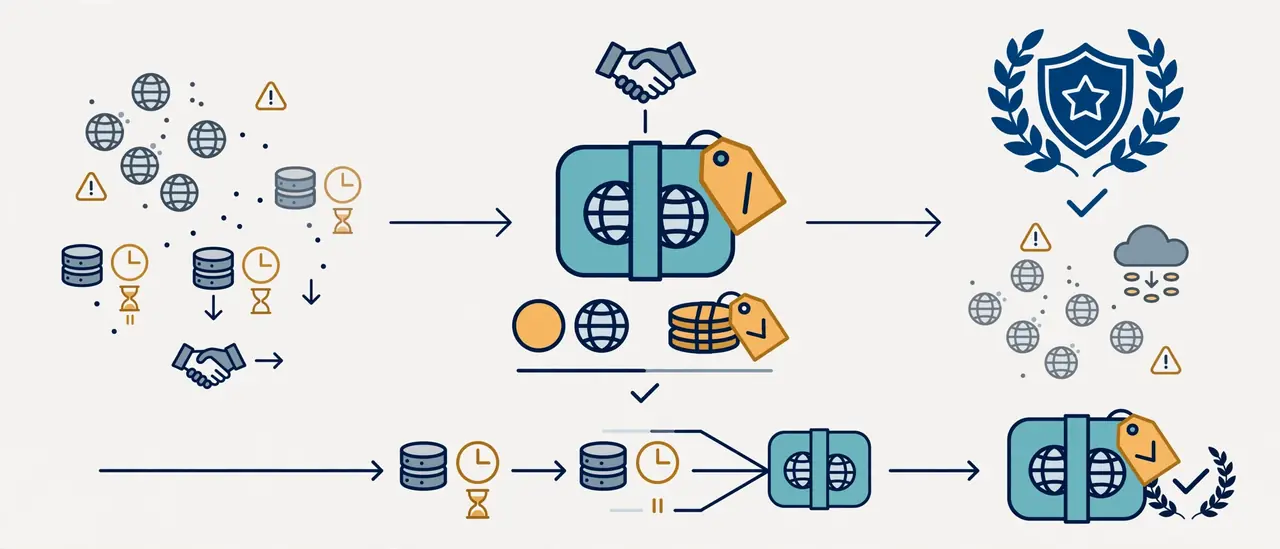
Some sellers, particularly domain investors, hold multiple related names and may be open to selling more than one domain in a single transaction. This changes the negotiation dynamic considerably.
- Volume discounts are common. A seller asking $8,000 for a single domain might accept $13,000 for two related names, effectively discounting the second by nearly 20%.
- Bundle only what you’ll actually use. It’s tempting to add a defensive registration or two into the deal, but every additional domain adds renewal costs and management overhead long after the negotiation ends.
- Negotiate the bundle as one line item. Presenting a single combined offer, rather than negotiating each domain separately, usually moves faster and avoids the seller anchoring each name individually.
- Clarify transfer logistics for each domain separately. Even in a bundled deal, each domain may sit with a different registrar, so confirm transfer timelines individually to avoid delays on the slowest one holding up the whole deal.
If your growth plans include acquiring a family of related domains rather than a single flagship name, it’s worth revisiting your naming strategy first, since a scattered portfolio without a clear primary domain rarely performs as well from a brand-trust standpoint as a single, well-negotiated flagship acquisition.
Legal and Trademark Due Diligence Before You Finalize Price
Price isn’t the only variable that determines whether a domain deal is actually a good one. Skipping legal due diligence can turn a well-negotiated price into an expensive mistake.
- Run a trademark search in your target markets before finalizing any offer. A domain that infringes on an existing registered trademark can expose you to a UDRP (Uniform Domain-Name Dispute-Resolution Policy) complaint even after a legitimate purchase.
- Check for prior UDRP history on the domain itself. A domain with a documented dispute history can carry ongoing legal risk regardless of who currently owns it.
- Confirm the seller has clear legal authority to sell. For domains held by companies or through brokers, request documentation confirming the seller is authorized to transfer ownership.
- Review any existing content or backlink history. A domain previously used for unrelated or low-quality content can carry SEO baggage that affects its actual value, sometimes justifying a lower offer than the seller expects.
Raising these questions during negotiation, rather than after the price is agreed, is a legitimate part of the process, and most professional sellers expect and respect thorough diligence from serious buyers.
Frequently Asked Questions
How do I know if a domain price is fair before negotiating?
Compare the asking price against recent sales of similar domains in length, extension, and keyword relevance, and cross-check with a professional appraisal tool. This gives you a data-backed range rather than a guess before you start any conversation about how to negotiate domain price effectively.
What’s a reasonable opening offer for a premium domain?
Most successful buyers open between 50-70% of their maximum budget, leaving room to negotiate upward while still signaling seriousness.
Should I use a broker to negotiate on my behalf?
A broker can be valuable for six-figure-plus domains or when you want to remain anonymous, since sellers sometimes price differently for corporate buyers versus individuals.
How long does a typical domain negotiation take?
Simple deals can close within days; complex negotiations involving brokers, escrow, and legal review often take two to six weeks.
What should I do if the seller won’t budge on price?
Walk away politely and leave the door open. Many sellers reconsider within weeks once they realize no other serious offers have materialized.
Is escrow necessary for smaller domain purchases?
For transactions under a few hundred dollars, some buyers skip escrow, but any deal in the thousands should go through a reputable escrow service to protect both parties.
Can I negotiate a domain price if the seller has it listed as “firm” or “non-negotiable”?
Yes, though your approach should shift. Rather than opening with a lower counter, ask a clarifying question about what’s driving the firm price, such as a recent appraisal or a specific offer already on the table, before deciding whether to negotiate further or accept the listed price.
Does buying through a broker change how I should negotiate?
Brokers typically manage the back-and-forth on your behalf, so your job shifts from direct negotiation to clearly communicating your ceiling, your rationale, and your timeline to the broker upfront.
Conclusion

Learning how to negotiate domain price without losing the deal comes down to three disciplines: valuing the domain accurately before you make contact, understanding the seller’s likely motivations, and moving through counter-offers with patience rather than panic. Buyers who skip the research step or let emotion drive their offers consistently pay more, or lose the domain entirely to a more prepared competitor. Ready to put these tactics into practice? Explore premium domain names for sale at OENOR and start your next negotiation with a clear valuation and a confident opening offer.
Pingback: Domain Stolen? Hack Recovery Guide That Works
Pingback: How to Check a Domain Trademark Conflict Before Buying