
Domain investing for beginners means buying digital web addresses at a low cost and reselling them later for a profit, based on brandability, keyword strength, or future demand. Unlike stocks or real estate, domains require minimal capital to start but carry unique risks around liquidity, valuation, and holding costs. Most beginners lose money in their first year because they buy on instinct instead of data.
That is the honest truth nobody tells you when you first search for “how to start domain investing.” This guide strips away the hype and walks you through what genuinely works, what wastes your money, and how to build a sustainable domain portfolio – whether you plan to flip names quickly or hold premium assets for the long term. If you are ready to acquire your first domain the smart way, you can explore a curated selection of premium domain names for sale that are already vetted for brandability and market demand.
What is Domain Investing, Exactly?
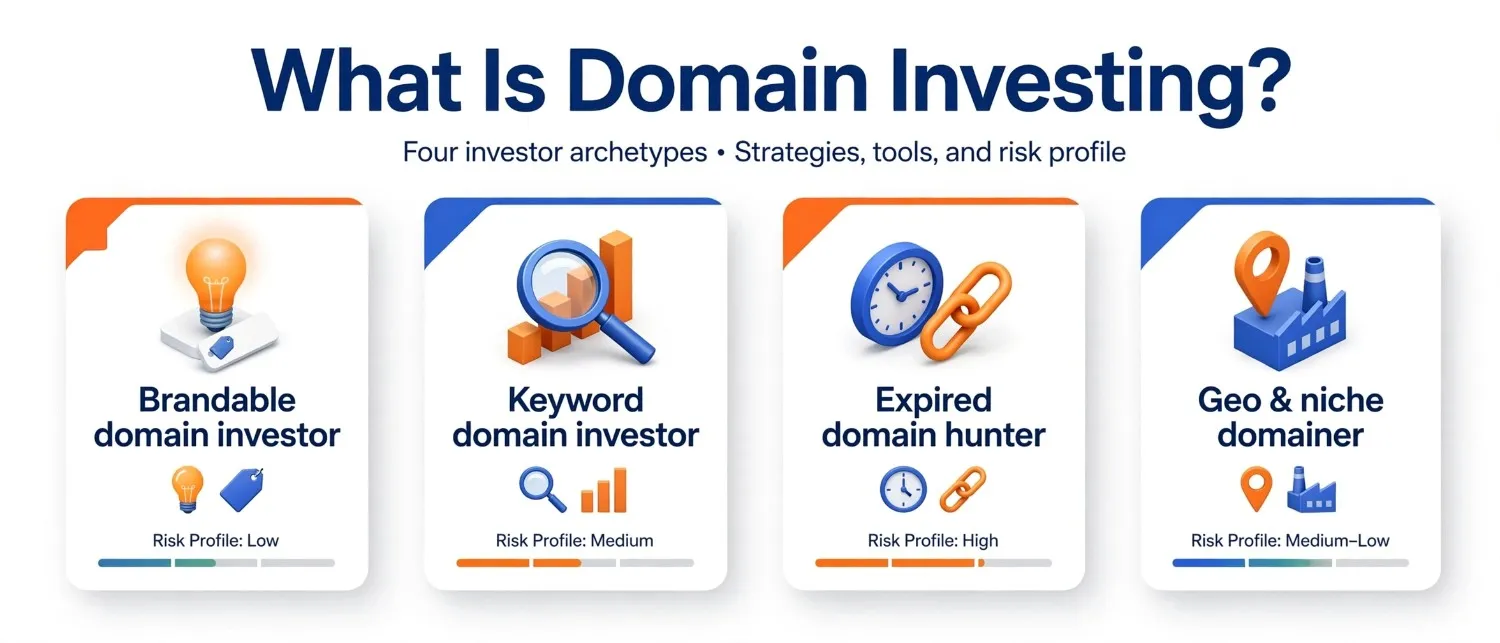
Domain investing – sometimes called domaining – is the practice of registering or purchasing internet domain names with the intent to resell them at a higher price. Investors typically fall into a few categories:
- Brandable domain investors: Focus on short, catchy, memorable names suited for startups.
- Keyword domain investors: Target exact-match or partial-match keyword domains with strong search volume.
- Expired domain hunters: Acquire domains that were previously registered and have existing backlink authority or traffic.
- Geo and niche domainers: Buy location-based or industry-specific names (for example, city names or trending tech terms).
Each approach has a different risk profile, holding cost, and expected time-to-sale. Understanding which lane fits your budget and patience level is the first real decision in domain investing for beginners.
Why Domains Hold Value
A domain’s value is not arbitrary. It is shaped by:
- Length and memorability
- Extension (.com remains the gold standard for resale value)
- Keyword relevance and search intent
- Brandability – does it sound like a real company?
- Historical use, age, and prior backlink profile
- Current market trends (AI, fintech, and health tech names, for instance, see spikes in demand)
If you want a deeper breakdown of how professionals actually price a domain, our detailed walkthrough on factors professional appraisers weigh when valuing a domain covers the exact criteria buyers and brokers use before making an offer.
How Domain Investing Actually Works: The Full Cycle
Domain investing for beginners typically follows a repeatable cycle rather than random guesswork. Understanding this cycle prevents the most common early mistake: buying a domain with no plan to sell it.
Step-by-Step: The Domain Investing Lifecycle
Step 1: Research
Identify emerging trends, industries, or keyword gaps using tools like Google Trends and keyword planners.
Step 2: Acquire
Register a fresh domain or purchase an existing one via marketplaces, auctions, or backorder services.
Step 3: Develop (optional)
Some investors add a simple landing page to demonstrate use-case potential to buyers.
Step 4: List
Place the domain on marketplaces, or list it with a “For Sale” landing page.
Step 5: Negotiate
Respond to inbound offers or make outbound offers to end-users likely to want the name.
Step 6: Sell and Transfer
Complete payment via escrow, then transfer ownership through the registrar.
Consequently, every domain you buy should already have a rough answer to the question: “Who would buy this from me, and why?” Domains bought without that answer tend to sit idle for years, quietly draining renewal fees.
Getting Started: A Practical Roadmap for New Investors
Since most beginners overspend or underprepare, here is a grounded roadmap to follow in your first three months.
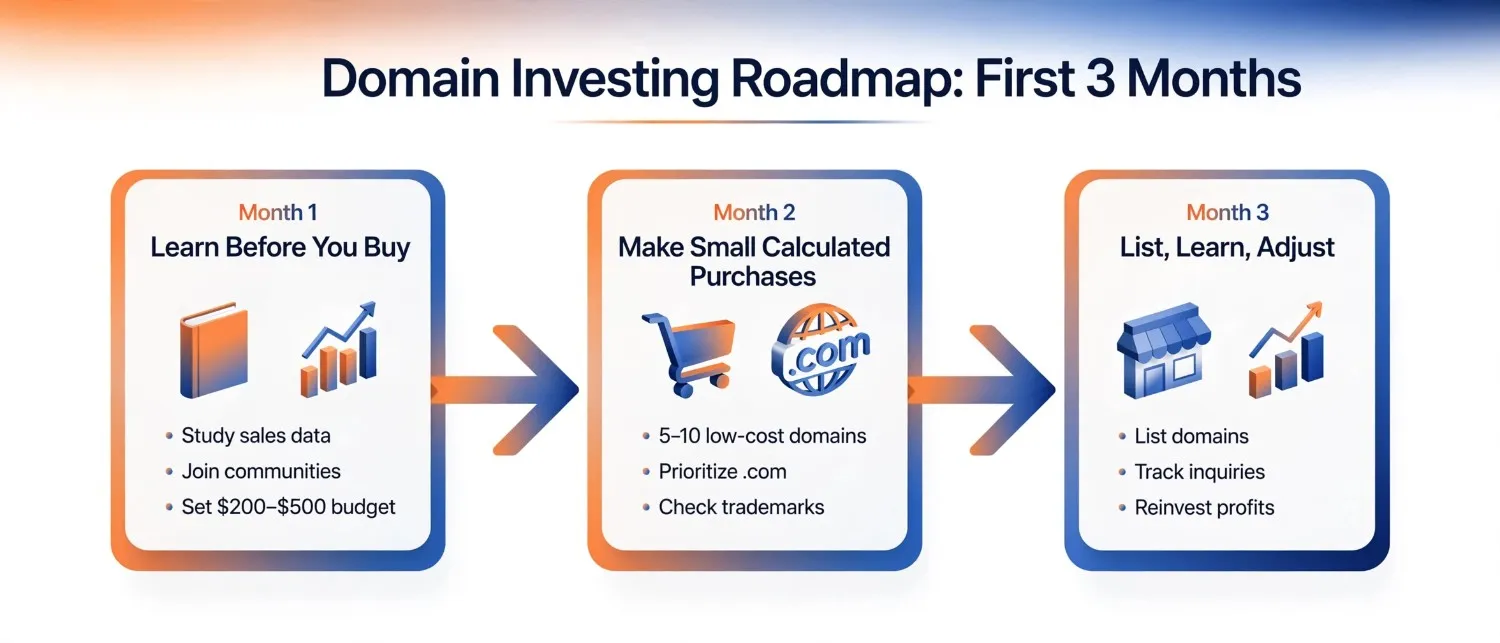
Month 1: Learn Before You Buy
- Study recent sales data on domain marketplaces to understand realistic price ranges.
- Join domain investing communities to observe deal patterns and pricing debates.
- Set a strict test budget (many experienced investors recommend starting with $200-$500 total).
Month 2: Make Small, Calculated Purchases
- Register 5-10 low-cost, high-potential domains rather than one expensive “trophy” name.
- Prioritize .com extensions with clear commercial or brand intent.
- Avoid domains that infringe on existing trademarks; always check trademark databases first.
Month 3: List, Learn, and Adjust
- List your domains for sale across relevant marketplaces.
- Track which names attract inquiries versus which sit unnoticed.
- Reinvest early profits into slightly higher-value acquisitions.
This slow, layered approach protects new investors from the single biggest risk in the space: tying up capital in domains that never sell.
Common Mistakes Beginners Make (and How to Avoid Them)
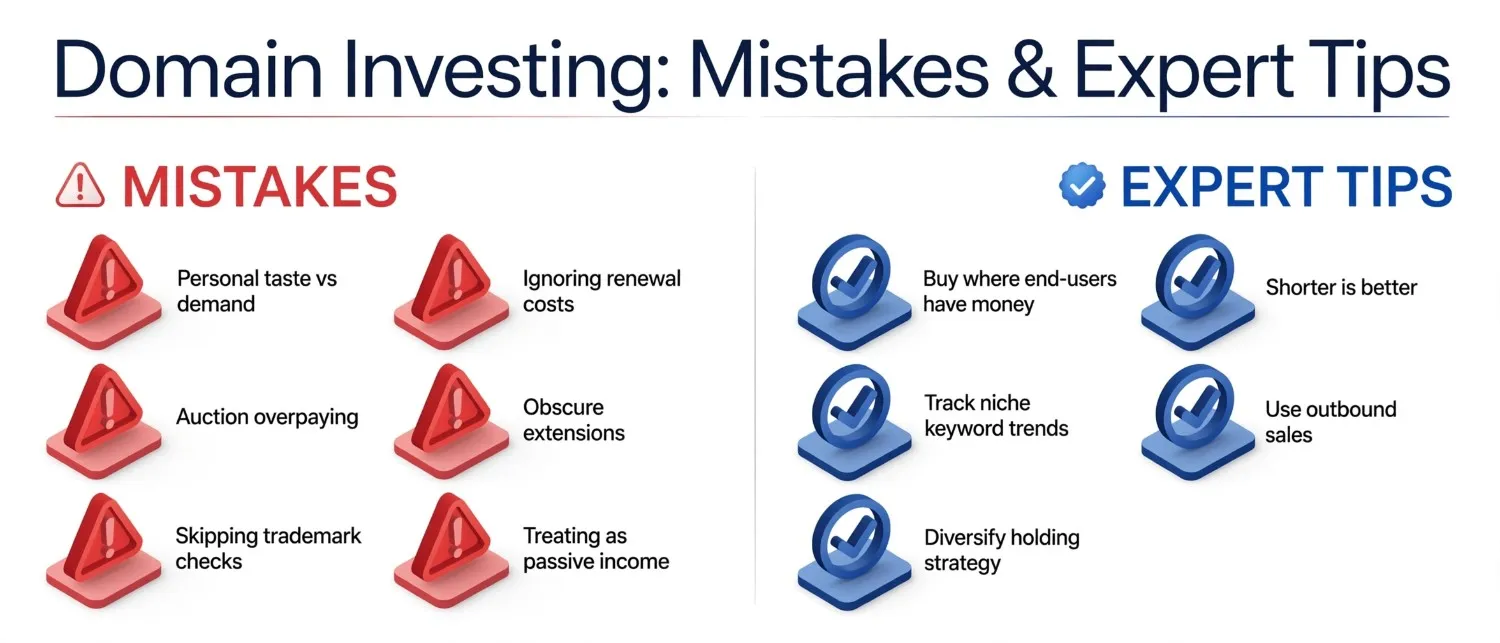
Domain investing for beginners is littered with avoidable errors. Here are the ones that cost people the most money:
- Buying based on personal taste, not market demand. A name you love may have zero commercial buyers.
- Ignoring renewal costs. Holding 200 domains at $12-$15 per year in renewals adds up fast if none are selling.
- Overpaying at auction due to bidding excitement. Set a hard ceiling before you bid, and stick to it.
- Choosing obscure extensions expecting .com-level resale value. Buyers overwhelmingly still prefer .com.
- Skipping trademark checks. This can lead to UDRP disputes and forced domain forfeiture.
- Treating domaining as passive income. It requires ongoing research, outreach, and portfolio management.
Because these mistakes are so common, even a small amount of due diligence puts you ahead of most first-year investors.
Expert Tips for Smarter Domain Investing
Seasoned domain investors consistently repeat a few core principles:
Buy where end-users already have money
SaaS, fintech, healthcare, and AI-related domains tend to attract serious buyers with real budgets.
Shorter is almost always better
Four-letter and pronounceable five-letter domains resell faster than long, hyphenated ones.
Track industry-specific keyword trends
We should track industry-specific keyword trends,not just general search volume, since niche relevance often outweighs raw traffic numbers.
Use outbound sales, not just inbound listings
Many six-figure domain sales come from investors directly emailing companies that could use the name.
Diversify your holding strategy
Mix a few long-term premium holds with faster-flipping brandables to maintain steady cash flow.
Domain Types Compared: Which Strategy Fits You?
| Domain Type | Typical Entry Cost | Time to Sell | Skill Level Needed | Best For |
|---|---|---|---|---|
| Brandable (.com) | Low-Medium | Medium | Beginner-Intermediate | Startups, agencies |
| Exact-Match Keyword | Medium-High | Medium-Long | Intermediate | Niche businesses, SEO-focused buyers |
| Expired/Aftermarket | Medium-High | Short-Medium | Intermediate-Advanced | Buyers wanting existing authority |
| Geo/City-Based | Low | Long | Beginner | Local businesses, real estate |
| Trend/Industry-Specific | Low-Medium | Short (if timed well) | Beginner-Intermediate | Fast-moving markets like AI or crypto |
Comparison: New Registration vs. Aftermarket Purchase
| Factor | New Registration | Aftermarket Purchase |
|---|---|---|
| Upfront Cost | Very low ($10-$20) | Higher ($100-$10,000+) |
| Risk Level | Lower financial risk | Higher financial risk |
| Existing Authority | None | Possible backlinks/history |
| Time to Find Buyer | Longer, since name is unproven | Often faster if demand is proven |
| Best For Beginners | Yes, ideal starting point | Only with research and budget |
Quick Answer: How Much Money Do You Need to Start Domain Investing?
Most beginners can realistically start with $200-$500. This covers 10-20 fresh domain registrations at standard registrar pricing, leaving room to learn market patterns before committing to costlier aftermarket purchases.
Where to Buy and Sell Domains
New investors typically use a mix of the following channels:
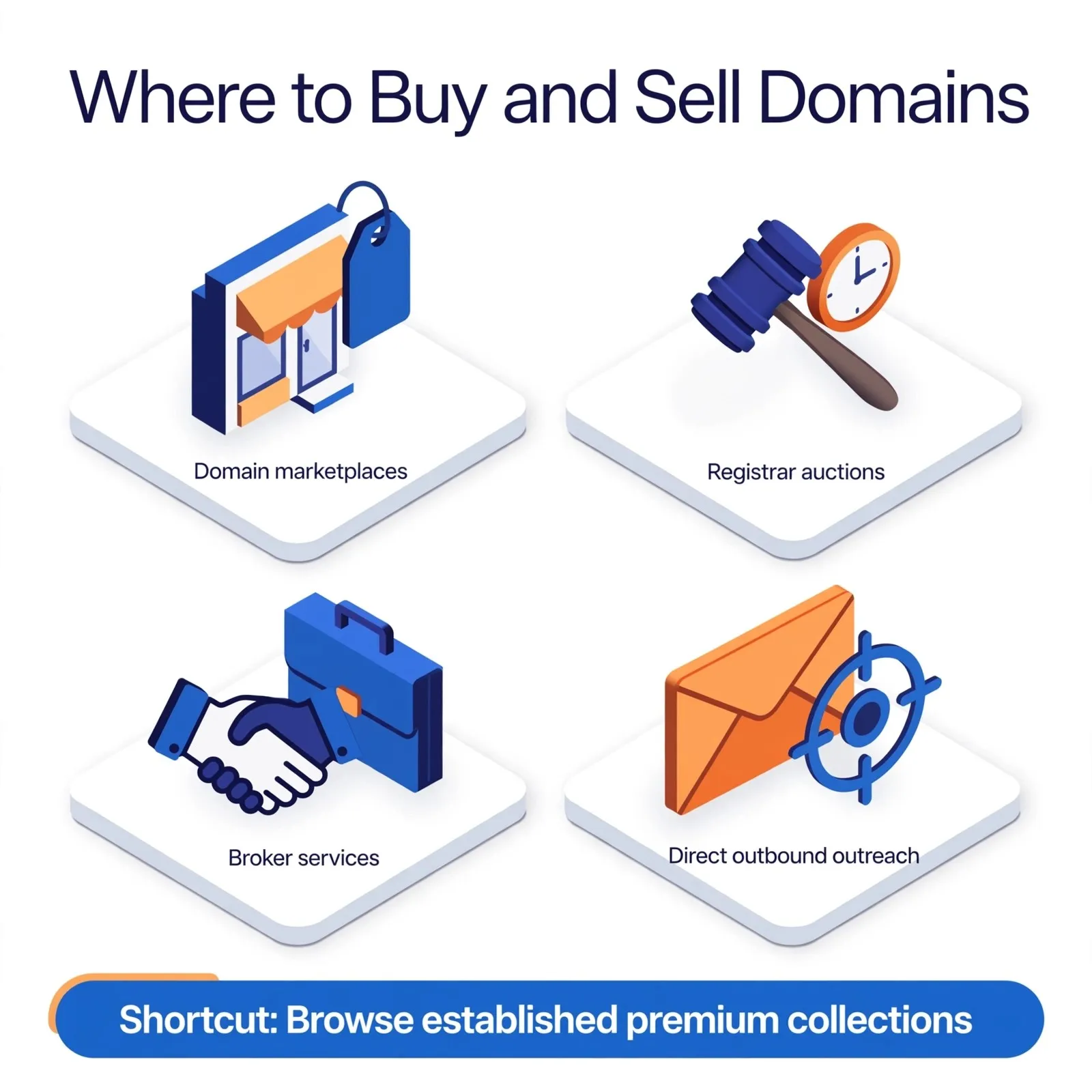
- Domain marketplaces: For buying curated, appraised names with clear pricing.
- Registrar auctions: For picking up expiring or backordered domains at competitive prices.
- Broker services: For negotiating high-value sales privately and securely.
- Direct outbound outreach: For contacting businesses that might want a specific name.
If you would rather skip the guesswork of registering unproven names, browsing an established collection of premium domain names can shortcut the research phase, since these names are typically pre-screened for brandability and resale potential.
Frequently Asked Questions
Is domain investing for beginners still profitable in 2026?
Yes, though margins have tightened as more informed buyers enter the market. Success now depends more on research and niche targeting than luck.
What is the safest way to start domain investing for beginners with limited funds?
Start with a small batch of low-cost, brandable .com registrations rather than one expensive aftermarket purchase, and track buyer interest before scaling up.
How long does it typically take to sell a domain?
Timelines vary widely, from a few weeks for trend-driven names to several years for niche or geo-based domains. Patience is part of the strategy.
Do I need a website on my domain to sell it?
No. Many domains sell purely on name value through simple “for sale” landing pages, though a basic concept page can sometimes speed up buyer interest.
What extensions are worth investing in besides .com?
.io, .ai, and .co have carved out relevance in tech-focused niches, but .com remains the most liquid and universally trusted extension for resale.
How do I avoid legal issues when buying a domain?
Always check existing trademarks before registering a name, and consult resources like the World Intellectual Property Organization for guidance on domain disputes.
Conclusion
Domain investing for beginners is not a get-rich-quick scheme, but it is a genuinely accessible entry point into digital asset ownership when approached with discipline. Start small, track real market demand instead of personal preference, and treat every purchase as a calculated bet rather than a gamble. As your understanding of pricing, buyer behavior, and industry trends grows, so will your ability to spot undervalued names before anyone else does. When you are ready to acquire your first asset with confidence, and take the first real step toward building your domain portfolio.